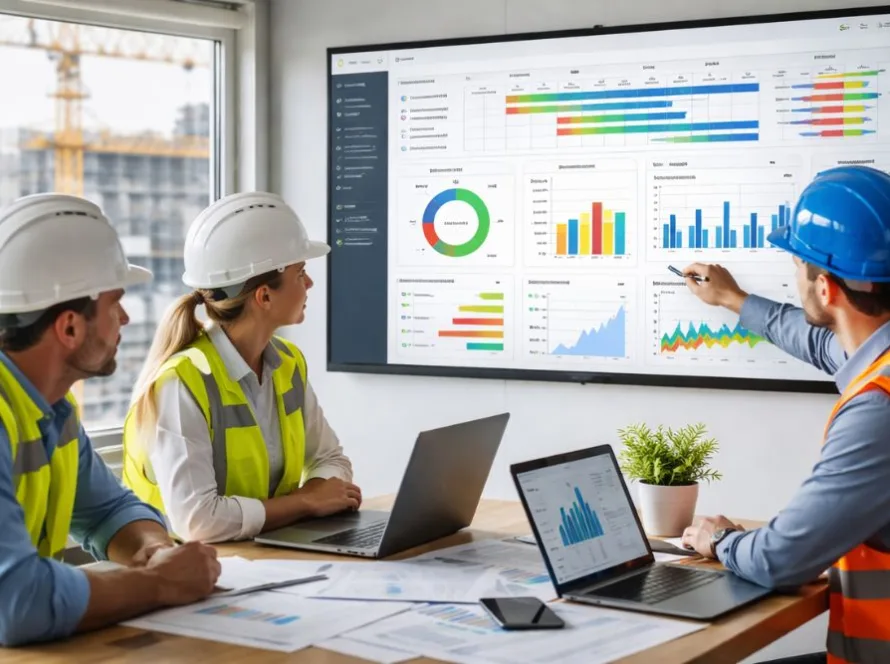
The construction sector is no stranger to complex challenges—project delays, budget blowouts, safety hazards, and fragmented workflows are all part of the terrain. But as infrastructure projects grow in scale and complexity, so too does the need for intelligent solutions. Artificial Intelligence (AI) has emerged as a transformative force, revolutionising how modern construction problems are tackled. It’s not just a buzzword—AI is rapidly becoming a key to unlocking greater efficiency, safety, and profitability across the construction industry.
By integrating technologies such as machine learning, computer vision, predictive analytics, and smart monitoring tools, businesses are overcoming long-standing obstacles and making smarter, faster, and more informed decisions across all project stages.
What Are the Main Construction Challenges AI Can Solve Today?
Construction projects, whether residential or large-scale commercial builds, are prone to many avoidable risks and inefficiencies. Here are the most common hurdles faced by the industry—and how AI is tackling them head-on:
- Project Delays: Caused by poor forecasting, miscommunication, and scheduling errors.
- Budget Overruns: Inaccurate cost estimation and inefficient resource allocation.
- Workplace Safety Issues: Inadequate hazard identification and manual supervision gaps.
- Labour Shortages: Inefficient workforce deployment and lack of skilled professionals.
- Ineffective Data Use: Fragmented systems and underutilised site data.
- Inefficient Equipment Usage: Machinery downtime and untracked performance.
AI offers tailored solutions to each of these issues, improving productivity, risk forecasting, and onsite visibility in real time.
How Does AI Integration Improve Project Outcomes?
AI’s strength lies in turning vast, complex datasets into usable insights. When integrated into construction operations, it transforms processes such as scheduling, safety compliance, and resource management by enhancing speed and accuracy. Here are several tangible benefits:
- Real-Time Analytics: AI collects and processes data instantly from drones, sensors, and site systems, enabling informed decisions without delays.
- Smarter Scheduling: Predictive algorithms forecast project timelines and proactively adjust schedules based on historical data, weather patterns, and task dependencies.
- Improved Safety Compliance: Computer vision tools detect PPE compliance, monitor risky behaviours, and reduce incident response times.
- Workforce Planning: AI assesses site activity and allocates workers dynamically, optimising labour usage.
- Reduction in Material Waste: AI helps track material inventory and prevent overordering or spoilage through usage prediction.
What Are the Most Practical AI Applications in the Construction Sector?
AI is no longer theoretical—it’s being actively deployed across various parts of the construction life cycle. Some of the most powerful applications include:
- Computer Vision via Drones: Conduct aerial inspections, monitor structural progress, and flag safety violations using image recognition.
- Natural Language Processing (NLP): Automate documentation, generate daily site reports, and process RFIs or site queries more efficiently.
- Predictive Maintenance: Prevent equipment failure by using IoT and AI to track operational performance and schedule maintenance before breakdowns occur.
- Digital Twins: Create real-time, virtual replicas of sites for better coordination, remote management, and simulation.
- Chatbots and AI Assistants: Streamline site logistics, HR queries, and basic compliance management through automation.
How Do AI Technologies Align With Specific Construction Problems?
The table below outlines how different AI technologies correspond to common industry challenges:
Table 1: AI Use Cases vs Construction Challenge
| Construction Challenge | AI-Powered Solution |
|---|---|
| Project Delays | Predictive scheduling algorithms |
| Budget Blowouts | Cost estimation models and tracking tools |
| Safety Hazards | Computer vision detecting unsafe behaviour |
| Labour Inefficiencies | Workforce analytics and smart deployment |
| Data Fragmentation | Cloud-based AI platforms and data centralisation |
| Site Inspections | Drone mapping and visual reporting tools |
Which AI Tools Are Leading the Charge in Construction Innovation?
From planning through to handover, these AI-driven technologies are transforming how construction operates:
Table 2: AI Technologies and Their Construction Roles
| AI Technology | Construction Application |
|---|---|
| Machine Learning | Delay prediction, cost risk forecasting |
| Computer Vision | Visual site inspections, PPE detection |
| Natural Language Processing (NLP) | Automated documentation, report generation |
| IoT & AI Integration | Asset tracking, predictive maintenance |
| Digital Twins | Site replication, remote management |
| Generative AI | Design alternatives and feasibility modelling |
How Can AI Reduce Construction Risks and Errors?
AI’s ability to pre-empt problems before they escalate is what sets it apart. Here’s how it contributes to risk mitigation:
- Identifies bottlenecks in project timelines before they occur
- Automates repetitive admin tasks to reduce human error
- Detects anomalies in equipment behaviour
- Flags inconsistencies in architectural plans vs on-site execution
- Predicts the likelihood of weather-related or supply-chain disruptions
This leads to fewer disruptions, increased transparency, and better communication between stakeholders.
What Is the Role of Data in AI-Led Construction?
Data is the foundation of AI success. In construction, it is often underutilised. By using AI, firms can gather:
- Environmental data (temperature, humidity, dust levels)
- Performance metrics (machinery hours, worker activity)
- Historical project records
- Safety incident logs
AI systems then analyse this data for trends, risks, and areas of inefficiency—providing real-time alerts and actionable insights for site supervisors and project managers.
How Does AI Improve Construction Site Safety?
AI significantly elevates safety standards by shifting from reactive to proactive approaches. Key interventions include:
- PPE Detection: Computer vision ensures all workers are wearing safety gear.
- Hazard Alerts: Sensors identify unsafe areas or equipment anomalies.
- Fatigue Monitoring: AI tools can flag signs of fatigue through wearable tech.
- Near-Miss Analysis: AI identifies patterns that typically precede accidents and helps adjust practices accordingly.
This not only protects lives but also helps meet compliance obligations and reduces costly downtime.
Who Can Help You Implement AI Solutions in Construction Projects?
If you’re a project manager, contractor, or site engineer looking to take the guesswork out of your construction process, then it’s time to partner with professionals who understand how to integrate intelligent systems with real-world building demands.
CCR Work is at the forefront of transforming construction projects through tailored AI solutions. With a deep understanding of project pain points and the tools to solve them—CCR Work delivers practical, scalable, and forward-thinking results. Whether it’s streamlining your site operations, reducing delays, or improving worker safety, CCR Work is equipped to bring your construction workflow into the modern age. Don’t just keep up—lead with confidence and innovation, powered by CCR Work.
Frequently Asked Questions (FAQs)
1. What is the most common use of AI in construction today?
AI is commonly used for predictive scheduling, site monitoring with drones, and improving safety compliance using computer vision.
2. How can AI help with project cost control?
By analysing historical data and real-time inputs, AI can predict cost overruns and recommend adjustments to procurement and labour allocation.
3. Is AI suitable for small to medium-sized construction firms?
Yes, many AI tools are scalable and can be customised to suit smaller project scopes, offering efficiency without high overheads.
4. What role does machine learning play in construction AI?
Machine learning enables systems to learn from past data and make accurate predictions about project delays, material usage, and risk events.
5. How does AI contribute to sustainability in construction?
AI reduces material waste, optimises energy use, and supports green building practices by improving precision and reducing rework.
6. Can AI replace human workers on construction sites?
AI enhances human capability rather than replacing it—supporting tasks like planning, monitoring, and safety so that teams can focus on execution.
References
• Safe Work Australia – Construction Safety and AI Integration
• CSIRO Data61 – AI Applications in Infrastructure
• Australian Construction Industry Forum (ACIF) – Technology in Building